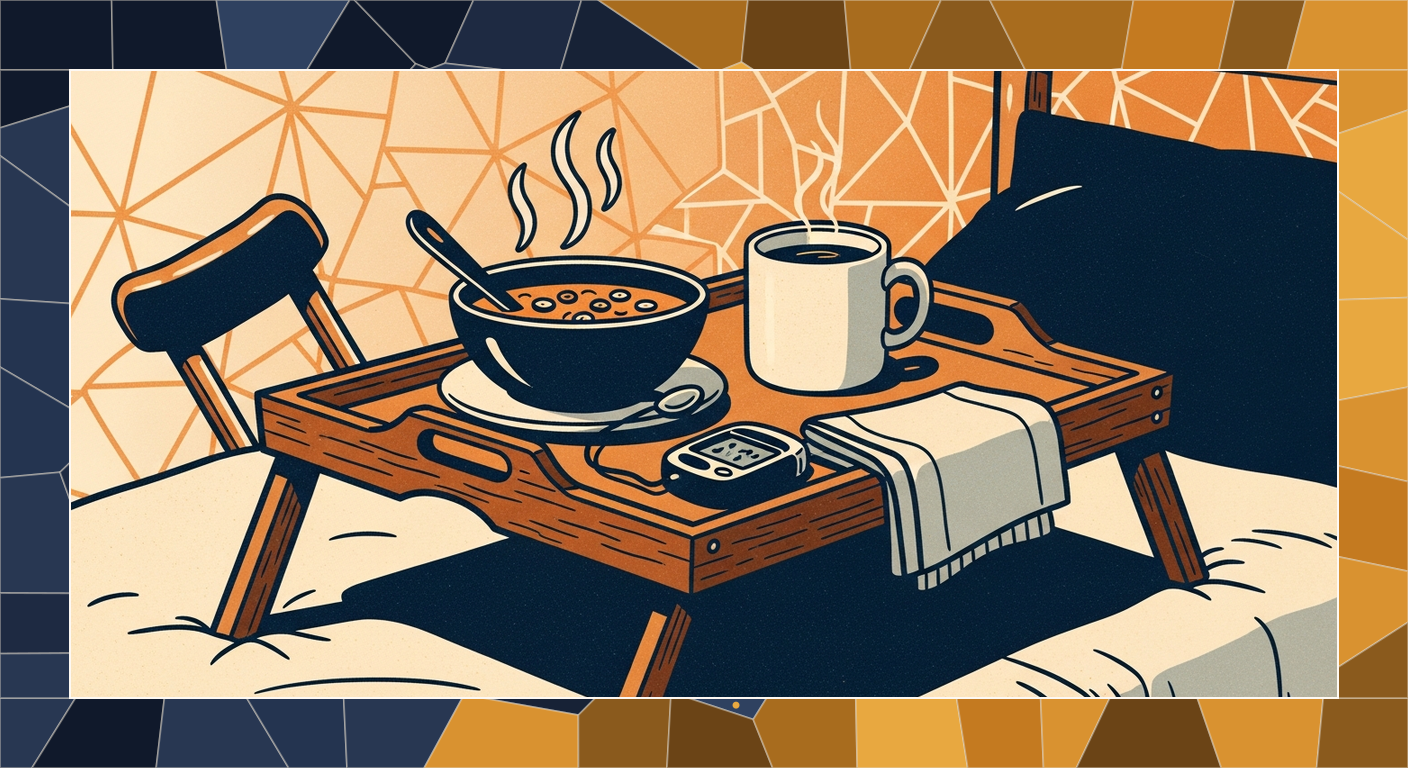
The moment
This still happens, and it is one of the reasons I want BTD out in the world. Somebody who comes across as bossy, or too forward, or like they are treating you as a kid, is still trying to help. Assume the best intentions.
But when the glucose state gets low the brain state follows it, and you do not have much time to appreciate anybody's goodwill. You focus on the process, and good help gets a harsh reaction back.
So I prefer to be direct, and to have the conversation before I need it. Find the number, then say it: why don't you have 5 Sweetarts, which moves me up about 20 mg/dL. Or 12 if I am really low, which is more like 40 to 50. Those are our estimates for my body, worked out ahead of time, and it takes 10 to 13 minutes to show up in the readings.
That feedback loop is efficient at a moment when a better conversation is not available. It heads off the overshoot: the huge glass of orange juice, the cookies and the cake, the roller coaster you did not want. Steady and calm and together, as much as possible.
There's help that lands, and there's help that lands on you. Someone grabs the thing you were already reaching for. Someone tells you to sit down while you're still deciding whether you can stand. It comes from love every time, and it costs you something every time, and saying so out loud makes you sound ungrateful for a kindness you didn't ask for.
What the research says
This finding runs backward from what you would expect. Women who receive high family support after a musculoskeletal injury are 91% less likely to return to work[1].
Meanwhile, support from friends makes women 3x more likely to return to work[1]. The difference isn't whether you get help. It's where it comes from and how it arrives.
A large Australian transport accident study turned up a split between men and women[1]. For men, family support works the way you'd expect: more help, better recovery. For women, the picture flips. High family support correlates with staying home longer. Friend support correlates with getting back to life.
Why? Family support for women often shows up as protection. As doing things for you. As "just sit down, I'll handle it." Friends tend to show up differently. They encourage, they mobilize, they remind you who you are outside of your injury.
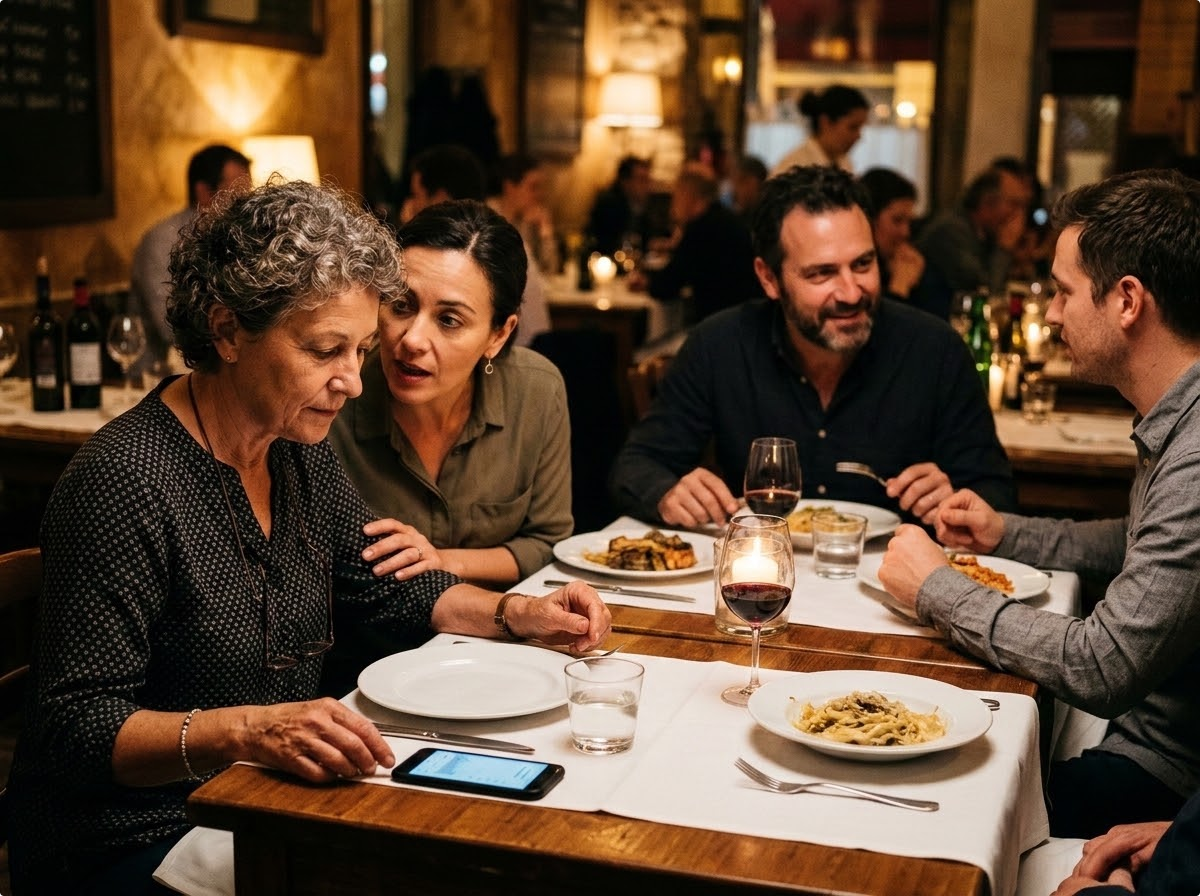
And here's what surprised me most. Employer support is the single strongest predictor of returning to work for everyone. People whose workplaces stayed connected during recovery were 5-7 times more likely to return[1]. Sometimes the outer circles matter more than you'd think.
One limit before you carry this into your kitchen: that study was about injured people, not diabetes, and it measured going back to work rather than healing. I'm keeping it anyway, because the mechanism underneath it, help that protects versus help that mobilizes, is running in your house today whether or not a researcher ever counted it there.
The six jobs your care partner absorbed without training
After a serious injury, your family members silently absorb up to six overlapping roles: researcher, case manager, patient advocate, rehabilitation coach, physical helper, and emotional supporter, all at once and without training.
Your care partner is running a small emergency response operation while also trying to be your spouse, your parent, or your friend. And they're probably exhausted in ways they won't tell you about.
The old household rules stopped applying, so write new ones together
Researchers have a term for what happens after injury: liminality. The old rules don't apply anymore, and new ones haven't formed yet. You're in between. In that space, every household routine becomes a question. Who does the dishes now? Who makes decisions? When do I hand things back as I heal?
Successful families work this out through continuous, explicit conversation. Failed renegotiation looks like avoidance, denial, and the hard one, reluctance to hand back control as the person recovers. Sometimes the helper becomes the gatekeeper.
Which means support isn't a switch that's on or off. It's a skill, and the people who love you most can accidentally become obstacles if they default to protection mode. The riskiest support can look exactly like the most loving support: the partner who won't let you try, the parent who does everything before you can ask, the family member who treats you as fragile after you've been managing hard things for decades.
The best help I've had in this recovery is my sweetheart's chair-exercise hunt from issue three. That isn't protection. It's someone handing me back a way to move.
Draw your recovery support map this week
Three circles. Do it on paper, with your family in the room.
- Inner circle (daily): Who handles daily care tasks? Are they burning out? Do they have permission to take breaks?
- Middle circle (weekly): Friends, extended family, colleagues. Who can you call for specific help? Meals, rides, company.
- Outer circle (check-ins): People who care but don't know what to do. Give them something specific. "Text me on Thursdays." "Send me something funny."
Then ask your primary caregiver the question they rarely hear: "What do YOU need right now?"
Recovery Support Pipe Dream, this issue's interactive companion

Recovery Support Pipe Dream maps how support actually flows in your household, showing where it connects, leaks, or blocks before you're stuck troubleshooting it in the moment.
Play it now, free on our site: https://explore.bettertogetherdiabetes.com/recovery/recovery-support-pipe-dream
Works in your browser, on your phone or computer.
Together This Week
The support that helps you recover isn't the support that protects you from trying. It's the support that keeps you reaching.
So draw the three circles this week. On paper, at the kitchen table, with your family in the room. Twenty minutes. The map is the whole point: it turns "who is helping me" from a feeling into a list somebody else can read, and it ends on the question for your primary caregiver.
BTD Guide 3: Navigating Transitions is about how families renegotiate roles when illness reshuffles everything: new diagnosis, starting school, moving out, changing care teams. Injury is one more version of the same conversation.
The circles will surface a name that surprises you, and probably a moment when somebody's help landed more like control. Say that part out loud while everyone is still at the table. Asking for what you actually need without sounding ungrateful is a skill, and it gets easier the first time you practice it in front of people who love you.
Take care,
Trapper
Science & Research notes
Science works through iteration, meticulous perseverance, comparison, challenge, and identifying patterns across the spheres of science, so no single study is the whole answer. Findings come from other populations, animal models, or other tissues in the body, because living systems share enough molecules and machinery that these clues help us understand our own health. Individual papers are cited as keystones to stir thinking, and each one opens onto years of peer-reviewed work it was built on. Follow the citations when something is relevant to you: they open further readings you can bring to your care team. This is all part of being Better Together.
- Prang, Berecki-Gisolf, and Newnam (2015), Health and Quality of Life Outcomes. Social support and return to work after transport injury in Australia, 1,649 people. Injured people generally, not diabetes; return to work, not healing speed. https://doi.org/10.1186/s12955-015-0291-8
Next issue: the healing timeline with diabetes, and where the standard rehab protocol needs modifying.