The moment
Science is always personal to me. I have an appreciation for all the women and men across the histories and layers of investigation into our health, our planet's health, and how things work. So when the Achilles went, I already had sense-making to do about earlier injuries in the same family. A frozen shoulder on the left, and, as I write this, a minor one on the right. Hip trouble tied to sciatica. I know the challenges of blood flow and glucose regulation, and everything sitting between being in balance the way a body does that on its own and getting there the synthetic way, feeding in insulin at different rates and letting glucose interact with everything.
People talk in generalities about circulation and heart disease. The way I understand it, it comes down to this: glucose can clog things up. Too low and the body sets different priorities. Too high and it persists as physical damage, so the immune cells that would clear inflammation away cannot get in and do it. With tendons, the picture I carry is glucose hitching a ride, binding onto parts of the tendon and changing how flexible it is. And beyond the diabetes, the forces I was putting on that tendon were remarkable. Moving fast, a dive move, pushing hard, straining, driving low. There is some exceptionalism in that too.
Then there was the magic of seeing the science inside a terrible situation. Hearing that force. I have described it as a muffled thunderbolt on a wood floor, and that sound is eerily planted in my mind. It goes straight to the tension a tendon holds, the energy stored in there, and how we get to move and jump and have all this amazing mobility.
The injury got me deeper into it, because I love to learn, and luckily thousands upon thousands of people through time have done the lab work on tendons in every part of the body. Quite a bit of it on the Achilles, and in model organisms, on how glucose and other things that stick onto collagen keep it from working the way it should, and how pain and mobility limits follow. I dove in. At the basic core level it is the cut of a marionette string. Things just do not work. There is the anatomy-poster version of how you are connected, and then there is the zoomed-in model, which is the one I love. Science in layers, moved along not by what we already know but by the curiosity of everyone who put in the work to save lives and make other people's lives better. Nothing has changed my life more.
At some point you go looking too. You put your injury and your diabetes into the same search bar, and what comes back is not reassuring. It's the kind of reading you do at 11pm, alone, because nobody handed it to you at the appointment.
What the research says
The tendon numbers in diabetes are worse than most people know. In type 2 diabetes, people are 4x more likely to develop tendon problems and up to 5x more likely to tear one all the way through[1].
Those are the numbers we have, and they come from type 2 research. I have type 1. The type 1 data is thinner, and I'm not going to dress that up. But the thing driving those numbers is glucose sitting in tissue over years, and that part we share.
This isn't bad luck. It's biology. And understanding the biology actually helps.
What decades of T1D do to your tendons
Every time glucose circulates through your blood, some of it binds permanently to proteins through a process that creates Advanced Glycation End-products, or AGEs. Your tendons are particularly vulnerable because tendon collagen turns over incredibly slowly. AGEs accumulate there over decades.
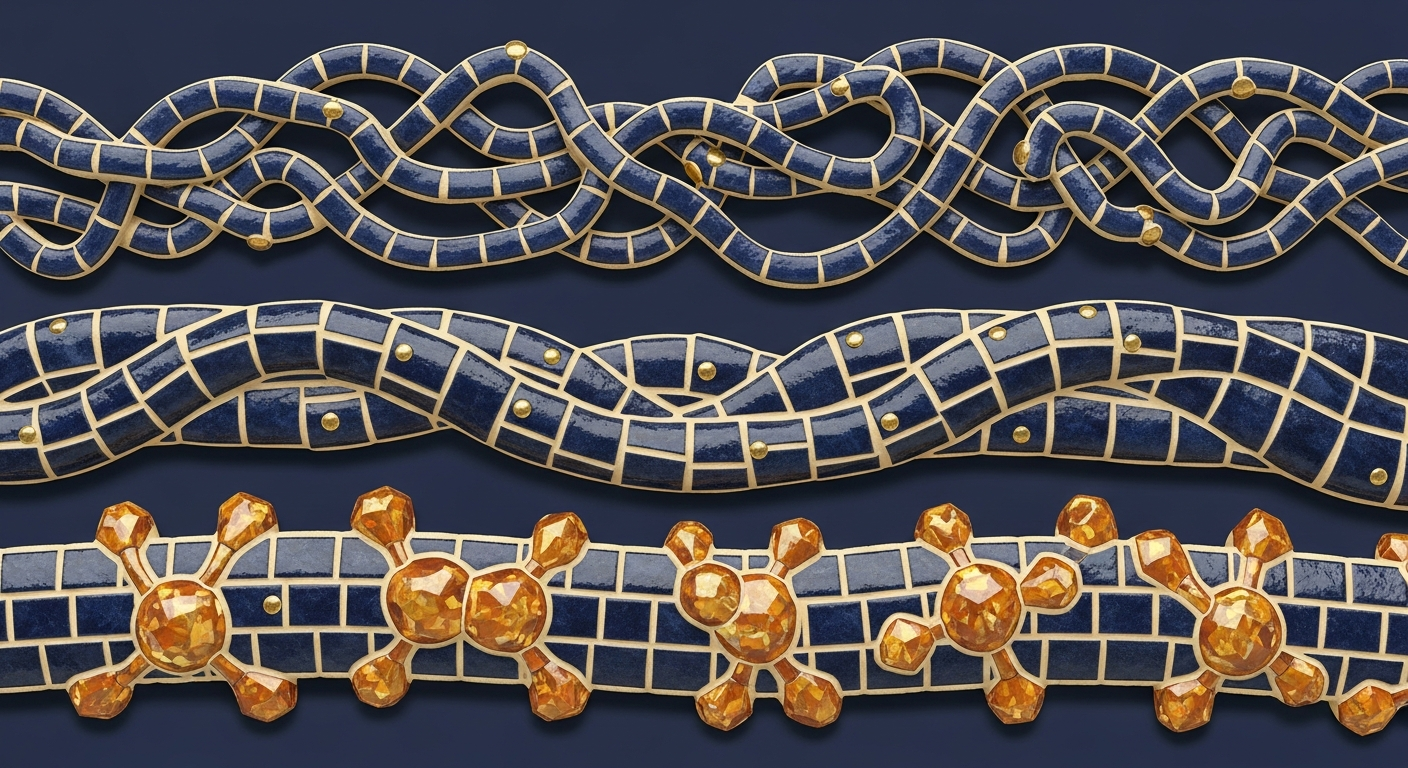
What AGEs do: they form crosslinks between collagen fibers. Unlike the organized crosslinks your body creates on purpose, AGE crosslinks are rigid and haphazard. They lock collagen fibers together in ways that eliminate the tendon's ability to flex under load.
Your tendon becomes stiffer. Less elastic. It takes less force to snap[2].
Imaging studies show this clearly. Even in people with no symptoms at all, diabetic Achilles tendons show collagen disorganization, thickening, and calcification. On ultrasound, 25.7% of people with diabetes have visible Achilles damage they cannot feel, compared to 11.7% of people without[3].
That one counted people with diabetes without separating type 1 from type 2, so read it the same way you read the numbers above. It is at least the right tendon, and it is measuring the thing we actually share, which is years of glucose sitting in tissue.
There's also a pattern in where that damage sits. In diabetes it clusters at the enthesis, the spot where the tendon anchors into bone, more than half the time[3]. Without diabetes it usually shows up higher, in the midportion of the tendon.
Your repair cells are suppressed too
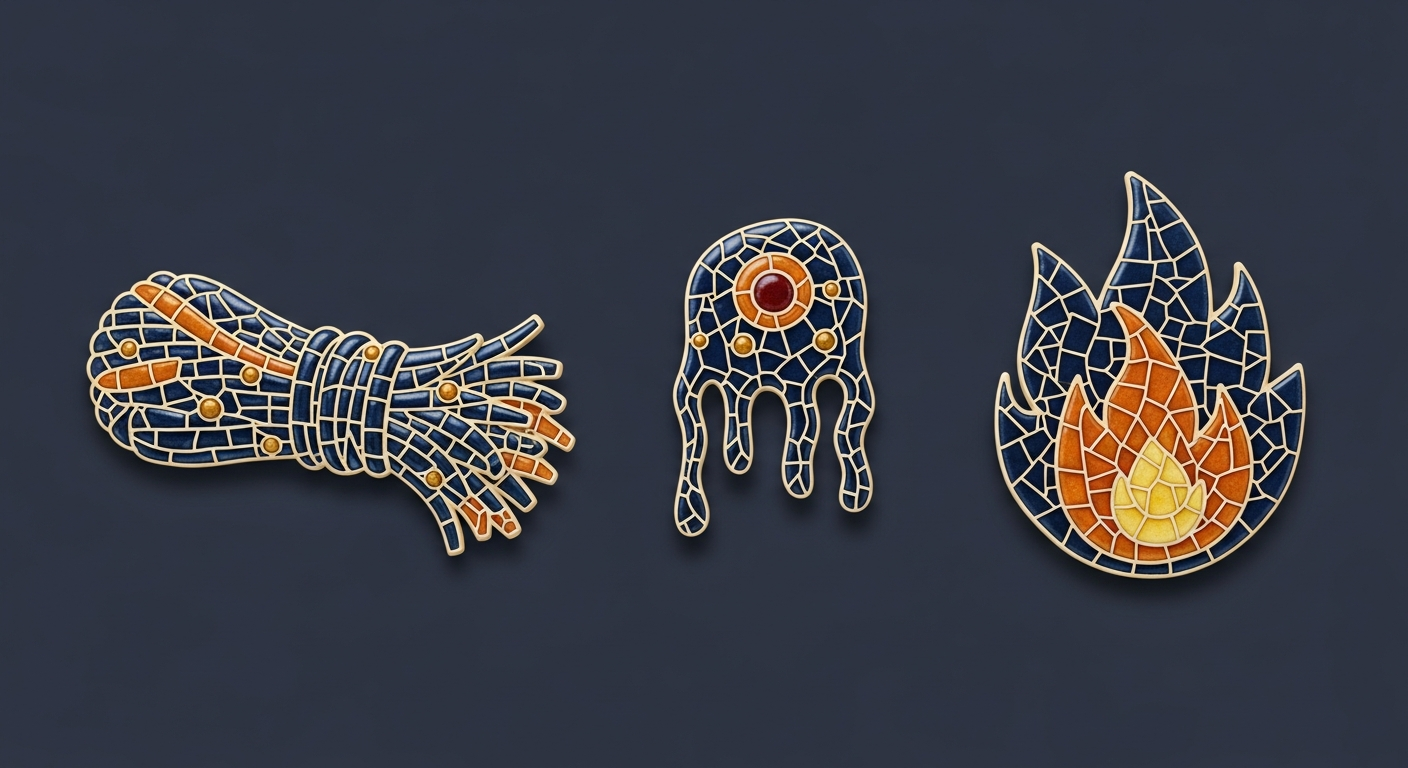
High glucose doesn't only damage the scaffolding. It suppresses the workers trying to rebuild it.
Under hyperglycemia, the cells responsible for tendon repair proliferate less, build less, and die more[4]. The surviving cells shift from producing strong Type I collagen to weaker Type III collagen, which is scar tissue instead of functional tendon[2].
AGEs keep tearing down what you're trying to build
AGEs interact with receptors on your tendon and immune cells, triggering chronic inflammation[2]. That inflammation produces enzymes that actively break down your existing tendon matrix[5].
So while your tendon is trying to heal, AGE-driven inflammation is simultaneously taking it apart.
The sharpest number we have is about A1c, and it comes from a shoulder study
In people with diabetes who had a rotator cuff repaired, the ones whose A1c climbed during months 3-6 after surgery re-tore at 51.1%. The ones who held it steady or brought it down: 14.3%[6].
Different tendon. You deserve to know what the evidence actually covers, so: I have not come across that same study on the Achilles.
But look at what got measured. Not shoulder anatomy. Blood sugar, during the months a repair is remodeling. That's the same blood and the same repair cells your leg is using right now, in the same window.
It's the best signal we have. I'm treating it as a target.
Which is the part worth carrying out of all this. Your tendon was already compromised before it ruptured, and that isn't your fault. It's the molecular reality of decades with T1D. You can't undo the AGE accumulation. You can control the healing environment from today forward, and months 3-6 is where that control does the most work.
Set an A1c target for months 3 to 6 with your endo
This is the stretch where blood sugar has the most leverage on whether a repair holds. Have the conversation directly:
"I read that in people with diabetes who had a rotator cuff repaired, the ones whose A1c rose during months 3 to 6 re-tore at about 51%, and the ones who held it steady were closer to 14%. I know that's a different tendon than mine. I still want a recovery-specific plan for keeping my A1c stable through that window[6]."
Ask about:
- Temporary basal rate adjustments for reduced activity
- A CGM alert strategy for overnight highs, when cortisol spikes from healing
- Whether any AGE-reducing agents are worth discussing for your situation
Don't wait for your next routine appointment. This is a specific ask for a specific stretch of months.
Together This Week
You aren't only recovering from a rupture. You're working against AGE-driven inflammation, suppressed repair cells, and compromised collagen at the same time, and months 3 to 6 is where that fight is decided.
So put those months on a shared calendar where your household can see them, and tell one person what they mean. Not the biochemistry. Just this: "these are the months my repair either holds or doesn't, and steady blood sugar is the part I control." People show up differently for a date on a calendar than for a vague ongoing hard time.
BTD Guide 1: Surveillance to Support is built on one idea: your body tells a different story than a non-diabetic body, and reading it without shame changes what you do next.
Then ask what they already knew. Did your surgeon or your PT bring up how diabetes changes tendon healing where anyone else could hear it, or did you find it yourself at 11pm? The person looking at that calendar with you deserves to know the science arrived late for you too.
Take care,
Trapper
Science & Research notes
Science works through iteration, meticulous perseverance, comparison, challenge, and identifying patterns across the spheres of science, so no single study is the whole answer. Findings come from other populations, animal models, or other tissues in the body, because living systems share enough molecules and machinery that these clues help us understand our own health. Individual papers are cited as keystones to stir thinking, and each one opens onto years of peer-reviewed work it was built on. Follow the citations when something is relevant to you: they open further readings you can bring to your care team. This is all part of being Better Together.
- Nichols, Oh, and Loiselle (2020), Journal of Orthopaedic Research. Tendon injury risk in type 2 diabetes. Type 2, as the copy says. https://doi.org/10.1002/jor.24388
- Vaidya, Lake, and Zellers (2023), Journal of Diabetes Science and Technology. How AGEs change tendon tissue in diabetes. Mechanism review. https://doi.org/10.1177/19322968221100842
- Abate et al. (2014), Foot and Ankle International. Ultrasound Achilles abnormalities in people with diabetes without symptoms. Diabetes not separated by type, as the copy notes. https://doi.org/10.1177/1071100713510496
- Lin et al. (2017), Oncotarget. High glucose and tendon cells. Laboratory study in rat cells, not humans. https://doi.org/10.18632/oncotarget.15418
- Lu et al. (2020), World Journal of Stem Cells. Tendon stem cell behavior in diabetic conditions. https://doi.org/10.4252/wjsc.v12.i11.1255
- Kim, Rhee, and Cho (2023), Arthroscopy. Re-tear rates after rotator cuff repair in people with diabetes, by blood sugar control. Shoulders, not Achilles. https://doi.org/10.1016/j.arthro.2022.08.021
Next issue: chair workouts, and the evidence that three minutes of movement every half hour changes your numbers.