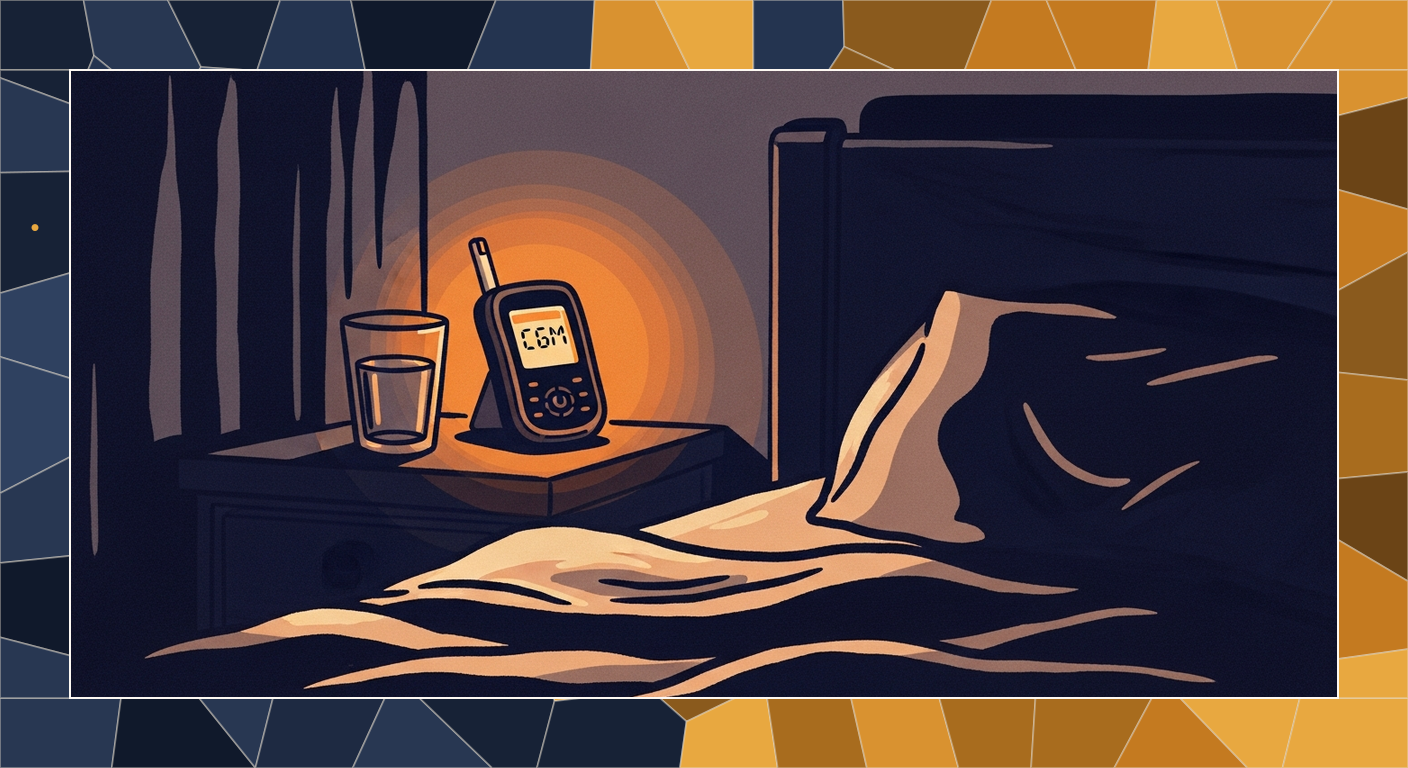
The moment
So much frustration when you combine a brand new sleeping pattern with a night boot on, propped up by what seems like a mountain of pillows to get the leg above your heart.
Then there is getting easy access to the readings. I do not really like having a cell phone nearby. It is always nearby anyway, and that is where I check when I roll over.
The immobility and the injury together make your limits more pronounced, and that is where the teamwork showed up again. Things got brought to that location. Sweetarts staged at every common space, at each place where a low might catch me, with everybody clear that you take care of the low first, before anything else. Having the supplies within arm's reach said that out loud without anybody having to say it.
That part feels really good. And you still carry a little guilt that they are spending their time sorting out updates that are not welcoming to anyone.
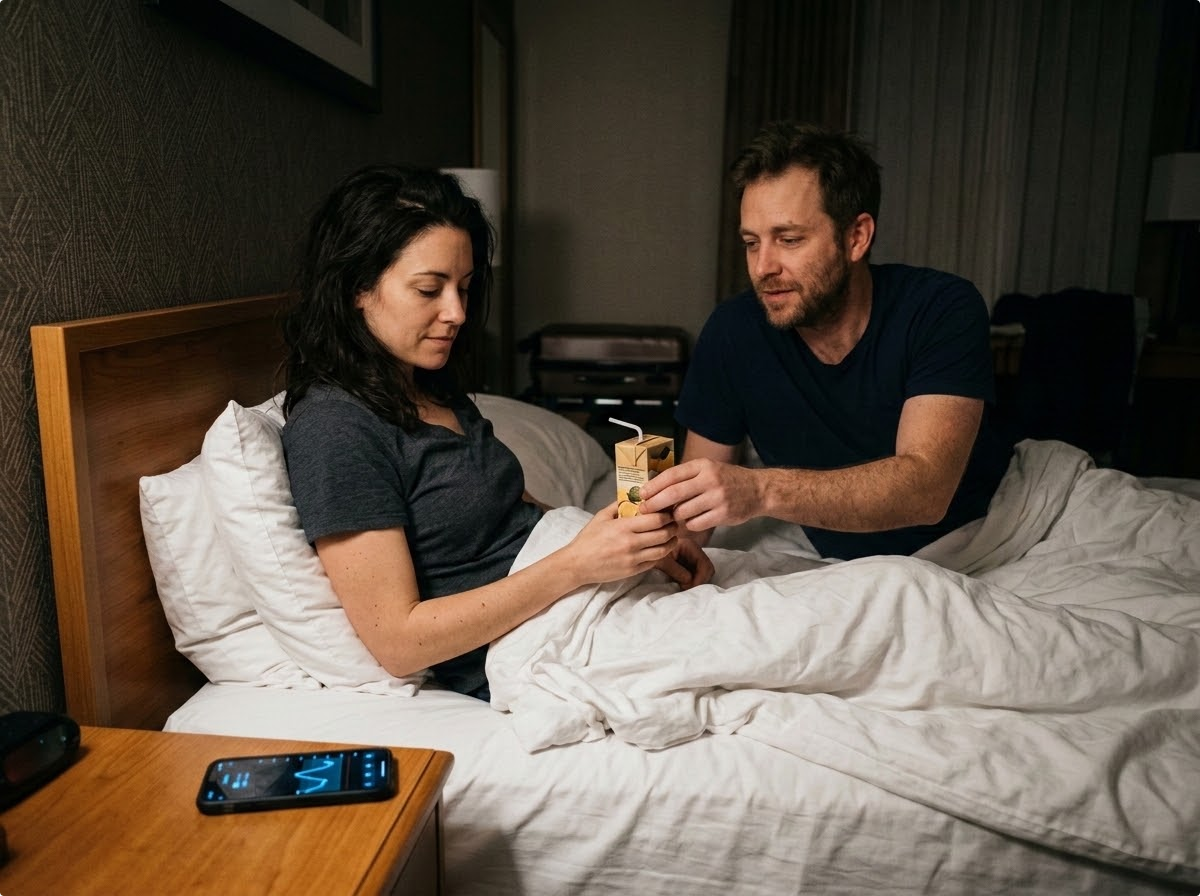
You know the feeling. The alarm pulls you out of something that wasn't really sleep anyway, and you check the number, and it's high again, and you're not even surprised anymore. Just tired.
What the research says
It doesn't take a bad month, or even a bad week. One night cut down to four hours measurably reduces how well your muscles take up insulin the next day. I have not found a study that measures that drop in people with type 1, so I will not give you a percentage to quote. What I will stand behind is the shape of it: real, measurable, and overnight.
And when pain is the thing wrecking your sleep, it gets worse.
Six steps from pain to high blood sugar and back to pain
Pain breaks your sleep. Acute pain pulls you out of the deep, restorative sleep your body needs for metabolic repair. Even before an injury, people with T1D already spend less time in deep sleep than average. The injury makes a fragile baseline worse.
Broken sleep triggers a hormone storm. Pain-disrupted sleep causes a 2-3x surge in cortisol, epinephrine, and free fatty acids. Cortisol blocks glucose from entering your muscle cells while telling your liver to dump more sugar into your blood. Epinephrine triggers rapid glycogen breakdown. Free fatty acids interfere with how your cells respond to insulin.
Your standard insulin doses stop working. All those counter-regulatory hormones mean your normal basal rate and correction factors are suddenly insufficient. Your pre-injury settings were calibrated for a body that exercises, sleeps well, and isn't flooded with stress hormones. That body is temporarily unavailable.
High blood sugar prevents you from sleeping. Here's where the cycle closes. Hyperglycemia means more trips to the bathroom at 3am, and now it isn't only the pain waking you. It's needing to pee. Hyperglycemia also suppresses melatonin, which chemically weakens your brain's sleep signal. The high blood sugar caused by bad sleep now prevents the next round of sleep.
And then it repeats. Pain → broken sleep → hormone surge → insulin resistance → hyperglycemia → more broken sleep → increased pain sensitivity (because sleep deprivation lowers your pain threshold) → repeat.
None of that is a personality failure. It's a documented physiological cascade with measurable hormones, real insulin resistance, and predictable consequences. Your numbers aren't out of control. Your body is responding to trauma exactly as designed. The insulin resistance from one bad night is temporary, and it reverses with better sleep. Needing significantly more insulin during recovery is expected, not a sign your diabetes is getting worse.
Pick one cycle-breaker for tonight
- Address pain before bedtime. Undertreated pain is one of the main drivers. Talk to your doctor about adequate pain control for overnight, not just daytime.
- Set a temporary higher basal rate. Start with a 10% increase overnight and adjust based on what your CGM shows.
- Keep a fingerstick meter on the nightstand. One quick check breaks the "is this real or is my sensor off" anxiety spiral.
- If you're pumping: Pre-program a recovery sleep profile with stronger correction factors and higher basal. Name it something you'll remember at 3am.
Break the Cycle, this issue's interactive companion

The Break the Cycle interactive lets you click through each step and choose where you want to intervene. Seeing the loop laid out makes it easier to find your exit.
Play it now, free on our site: https://explore.bettertogetherdiabetes.com/recovery/break-the-cycle
Works in your browser, on your phone or computer.
Together This Week
Pain management is diabetes management. Break the cycle at step one and the other five steps have less to work with.
So tell whoever sleeps in your house what your 3am actually looks like, and ask them for one specific thing: the meter moved to your nightstand, the boot propped before you get in bed, permission to wake them. People who love you will guess wrong about what helps unless you tell them.
BTD Guide 1: Surveillance to Support is about the difference between watching numbers and reading patterns. A 250 at 3am isn't a verdict. It's a cortisol report with a date stamp.
Then ask what 3am sounds like from their side. Do they wake when the alarm goes off? Do they lie there deciding whether to say something? The cycle usually has two people in it, and the other one often thinks they're supposed to pretend they slept through it.
Take care,
Trapper
Next issue: the pain medication that makes your CGM lie to you, and the one that hides your lows.