The moment
I am a vegetarian, so eating for healing looks like a high-protein veggie burger, or a tofu burrito, and a lot of both.
Over time it gets distressful to know that you are getting in the way of something you want to heal up really well. You are immobile, and the immobility counteracts the things you are supposed to be doing, the movement and the muscle growth. That tension was there every day. Mobility and movement would be a big deal for glucose uptake and insulin efficiency, and mobility was the one thing I did not have.
So the higher numbers frustrated me more than they normally would, because the sitting and the resting and the recovering create some of those highs on their own, whether or not you have eaten anything at all.
Then there is the size of an injury like this. Up to a year or more to fully recover. I had not gone down that road before, so it was hard to have any real perception of what was coming next, or how quickly things would heal and become, so to speak, normal.
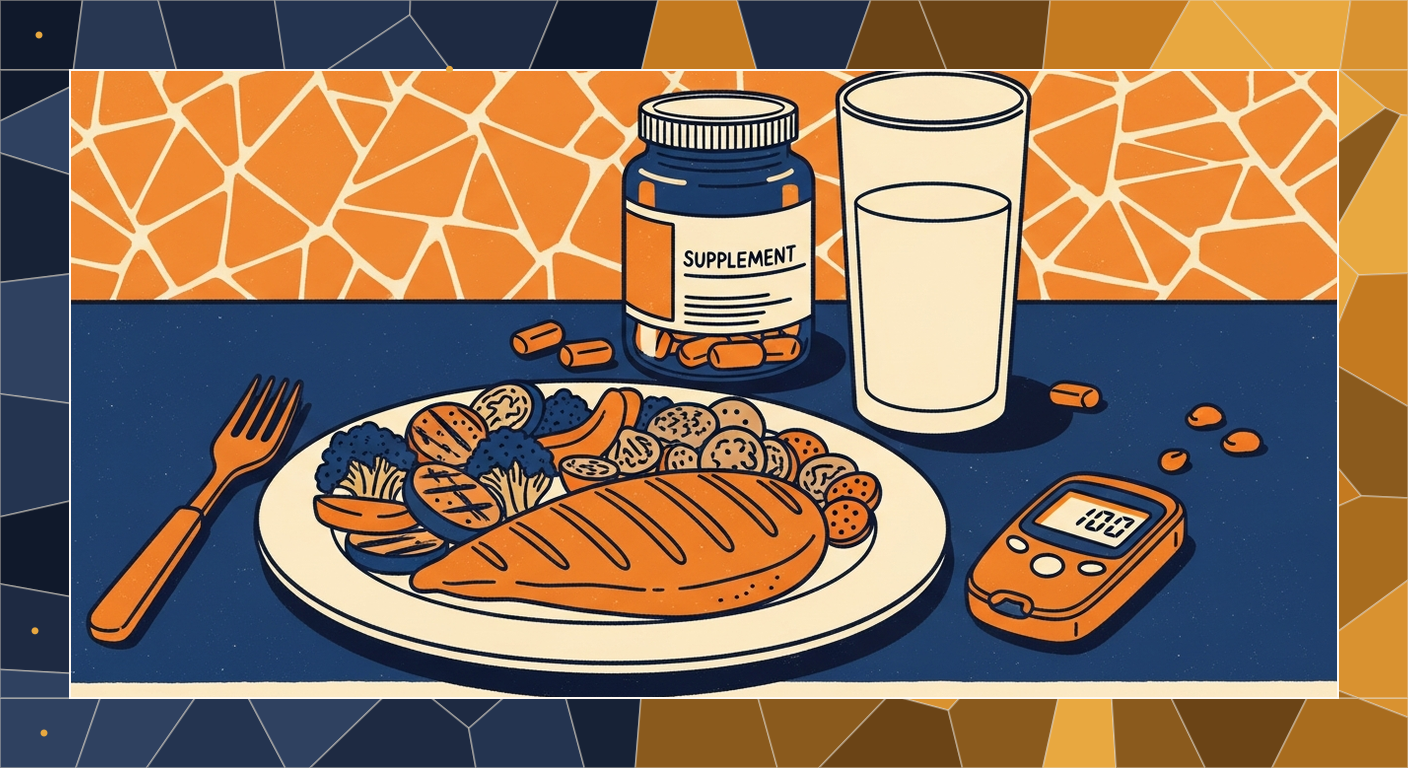
You've done this math a thousand times. Carbs go in, insulin goes in, blood sugar comes down. It isn't perfect, but it's predictable. Then you start eating for recovery, more eggs, more beans, more tofu, more protein shakes, and suddenly nothing makes sense. Your dinner had barely any carbs. You bolused for what was there. And three hours later your CGM shows a stubborn 230 that won't come down no matter how much you rage-bolus.
Here's the piece that explains it: protein and carbs play by completely different rules in your body. And if you have Type 1, the game is rigged.
What the research says
A high-protein recovery meal can raise your blood sugar for up to eight hours. Not one or two like carbs. Eight.
Your standard bolus was designed for the carb game: fast action, quick peak, done. It's long gone before protein glucose even shows up.
Protein triggers glucagon with nothing to stop it
When you eat protein, your gut releases amino acids. In someone without T1D, those amino acids trigger both glucagon (from alpha cells) and insulin (from beta cells). The insulin keeps the glucagon in check. It's a balanced system.
In T1D there's no balance. Your beta cells are gone. So protein triggers an unopposed glucagon response. Your alpha cells tell your liver to convert those amino acids into glucose, and there's nothing to stop it.
The result: a slow, delayed rise that starts 2-3 hours after eating and can persist through the night. Standard carb counting doesn't catch it. Your pre-meal bolus is already working its way out of your system by the time the protein glucose arrives.
And here's the kicker. The protein guidance for active people with T1D runs 1.1 to 1.5 grams per kilogram of body weight per day[1], and the injury researchers push athletes without diabetes higher still[2]. Either way, healing asks more of your plate than a normal week does. More protein means more unopposed glucagon, which means more of those mysterious delayed highs.
Collagen peptides fight the glucagon problem directly
This is the part that surprised me. Specific hydrolyzed collagen peptides may work with your glucose control instead of against it.
Collagen peptides stimulate GLP-1 release from your gut. GLP-1 can't make you produce insulin, since you don't have the beta cells for that. But it can suppress glucagon from your alpha cells. It goes straight at the unopposed glucagon problem that makes protein so tricky.
Collagen also slows gastric emptying. Food hits your bloodstream more gradually, which flattens the postprandial spike.
And here's the bonus. Collagen provides the exact amino acid building blocks your healing tendon needs: glycine, proline, hydroxyproline.
Better tendon repair and better glucose stability. Not many supplements can claim both.
Vitamin C builds your collagen; test your zinc, magnesium, and D
A few other things worth checking with your endo:
- Vitamin C is essential for collagen synthesis. Without enough, your healing tissue forms weak, disorganized scar. Heads up though: high-dose Vitamin C can interfere with some CGM sensors, similar to acetaminophen. Standard dietary amounts are fine. Megadoses need caution.
- Zinc and magnesium are both commonly low in T1D, and both support wound healing while improving fasting glucose. Worth testing.
- Vitamin D deficiency impairs immune function and can trap wounds in chronic inflammation. If you haven't checked your levels recently, now's the time.
Put together, this means you're not choosing between healing and glucose control. Those stubborn highs after protein meals aren't your insulin failing. They're your alpha cells doing exactly what protein tells them to do, with no beta-cell brake in the room. You need a different insulin strategy for a recovery diet, not a smaller plate.
Split your bolus for high-protein meals
For a high-protein, moderate-carb meal: deliver 50-60% of your bolus upfront for the carbs, then extend the remaining 40-50% over 3-4 hours for the protein.
On MDI instead of a pump: consider a small second correction dose 2-3 hours after a heavy protein meal, based on your CGM trend. Watch, wait, correct. Don't stack aggressively.
Two asks for your care team while you're at it. Ask your endo about adding hydrolyzed collagen peptides (15-20g daily), which may reduce the glucagon problem while providing the amino acids your tendon needs. And get your Vitamin D, zinc, and magnesium levels checked at your next blood draw. Recovery is when those gaps cost you the most.
Together This Week
The stubborn high three hours after a high-protein dinner isn't a failure of discipline. It's a glucagon response with nothing standing in its way, and it needs a different tool than a bigger bolus.
So try one extended bolus this week, on one meal, and tell whoever cooks with you what you're testing and why. Recovery meals are usually a household project, and the person who put dinner on the table deserves to know that the number two hours later isn't a verdict on their cooking or your willpower.
BTD Guide 1: Surveillance to Support is about turning the data you're forced to track into something useful. The same CGM that catches the protein rise can teach your family what your body actually needs.
And ask what they've noticed. The people who eat with you have watched a hundred of these meals land. Somebody at your table already has an opinion about which dinner always ends badly, and they have been waiting a long time for that to count as useful information instead of a criticism.
Take care,
Trapper
Science & Research notes
Science works through iteration, meticulous perseverance, comparison, challenge, and identifying patterns across the spheres of science, so no single study is the whole answer. Findings come from other populations, animal models, or other tissues in the body, because living systems share enough molecules and machinery that these clues help us understand our own health. Individual papers are cited as keystones to stir thinking, and each one opens onto years of peer-reviewed work it was built on. Follow the citations when something is relevant to you: they open further readings you can bring to your care team. This is all part of being Better Together.
- Cavallo et al. (2024), Nutrients. Protein intake guidance for active people with type 1 diabetes. General activity, not injury recovery specifically. https://doi.org/10.3390/nu16060907
- Tipton (2015), Sports Medicine. Protein needs during injury and immobilization in athletes without diabetes. https://doi.org/10.1007/s40279-015-0398-4
Next issue: what five days of stillness does to your insulin, and the smallest movement that fights back.