Looking back at the conversations we missed
Looking back, I can see it clearly.
I've lived through every era of the tools: urine strips while the insurance cleared, a meter that took 60 seconds, a paper log book the size of a checkbook, then pumps, then a CGM that shares my numbers with the people who love me. Every one of those changes shifted what support could look like. We rarely sat down and talked about what should change with it.

The clearest one is the CGM. Once someone can see my numbers in a share app, the question "What's your number?" right after a beep doesn't need to be asked. The answer is already on their phone. If you're in the know, why ask a person who's dealing with a low, at the moment they're most vulnerable? But the habit of asking for the number can outlast the technology that made it unnecessary.
The oldest one is with my mom. When I was a teenager, a low meant worry from my end, worry from hers, and frustration from both. I wish we'd had a conversation about better ways to handle it, for both of us, not just me. We never had that one.
That's what a renegotiation that never happened looks like. New technology, or a new stage of life. Same old patterns. And nobody naming what's different.
The Moment
Every transition in this series needed a conversation.
Some of you had those conversations. Some of you are still waiting. And some of you are looking back at transitions that passed without the explicit "who does what now?" that they required.
This issue is for all three. Because here's the truth: It's never too late to have the conversation you should have had.
The Pattern
Here's what happens when renegotiation doesn't happen: Support systems break silently.
What silent breakdowns look like:
- A parent keeps helping after the young adult wants autonomy
- A partner stops asking questions because they got snapped at once
- Technology changes everything, but the support stays frozen in time
- Someone does less and someone else quietly picks up the slack
- Resentment builds where communication should live
These aren't failures of love. They're failures of explicit conversation. The support was there. It just wasn't adapted.
Multiple Perspectives
If you're the person with diabetes:
You've been through every transition in this series. Some went well. Some didn't. And looking back, you can probably identify at least one moment where a conversation would have changed everything. Maybe you've carried that weight alone. Maybe you've wished someone would have asked. Maybe you pushed people away when you really needed them to push back.
If you're the long-term support person:
You've watched them grow through every stage. You've adapted, sometimes well, sometimes not. And there are probably moments you wish you'd understood better, asked about sooner, or handled differently. Looking back isn't about blame. It's about learning for what comes next.
If you're the family looking at years of shared history:
Every family has these moments. The transitions that slipped by. The roles that shifted without announcement. The support that eroded or evolved without anyone naming it. Looking back together isn't therapy. It's just conversation. And it can happen anytime.
What Actually Helps
The couple who finally talked about the CGM:
"It took us two years to figure out what was wrong. Then one night I said, 'You used to ask about my numbers, and now you don't, and I miss it.' And she said, 'I stopped because you seemed annoyed.' And we both realized: nobody had said what they actually wanted after the CGM changed everything."
The conversation was late. It still worked.
The adult child who called their parent:
"I was thirty-five when I finally told my mom: 'I know you were scared when I was diagnosed. I know you did everything you could. And I need you to know: the way you supported me then was exactly what I needed. It's just different now.' She cried. I cried. But we finally got to say the things we'd been carrying."
Old transitions can get new conversations.
The parent who admitted what they'd gotten wrong:
"I held on too long. I kept checking on her numbers even after she'd moved out, gone to college, gotten married. When she finally told me to stop, I was hurt. But then I realized: she wasn't rejecting me. She was asking me to show up differently. So now I ask about her life, not her numbers. That's the renegotiation we needed."
The support person can start the conversation too.
The family that made renegotiation a practice:
"Every time something big changes (new technology, new relationship, new job, new stage of life), we have 'the conversation.' We actually call it that. 'It's time for the conversation.' We sit down and ask: What's different? What do you need now? What should I stop doing? What should I start?'"
Renegotiation doesn't have to be one-time. It can be a practice.
The Timeline Exercise
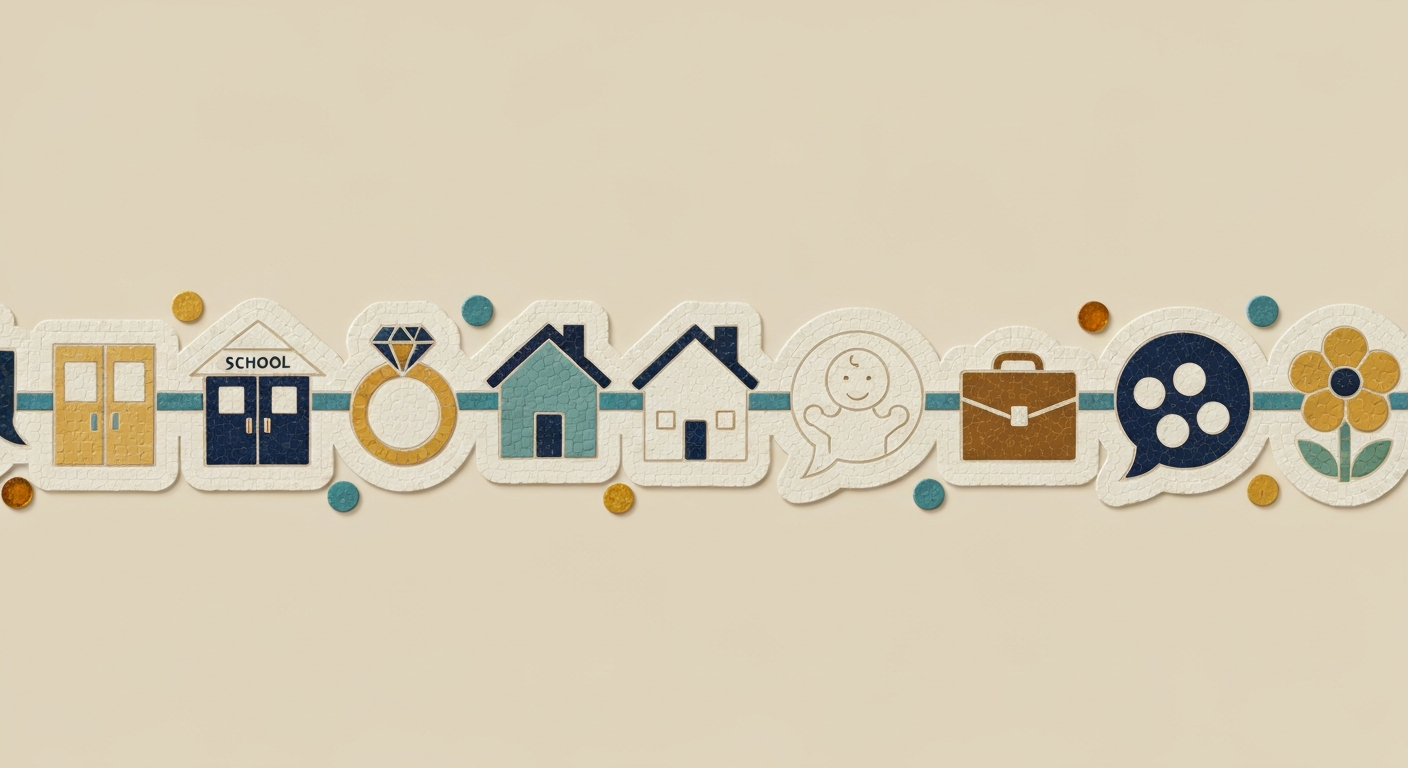
Look back at your diabetes life. Mark the transitions:
- Diagnosis
- School changes
- Moving out
- New relationships
- New technology (pumps, CGMs)
- Career changes
- Parenthood
- Losses
- Medical changes
For each one, ask:
- Did we have an explicit conversation about support?
- Did roles change clearly or silently?
- What should we have talked about?
- Is it too late to talk about it now?
Some transitions are ancient history. Some still need resolution. You get to decide which is which.
The Reframe
FROM: "We missed our chance to talk about this"
TO: "Every day is a chance to renegotiate. Let's start now"
The conversation you should have had five years ago? You can still have it. The support that silently broke down? You can rebuild it. The roles that shifted without explanation? You can explain them now.
It's never too late. It's just different.
This Week's Activity: The Letter You Never Wrote
Write a letter to someone in your diabetes support network. It can be:
- A parent who did their best during a hard transition
- A partner who showed up in ways you never acknowledged
- A younger version of yourself about to face a transition
- A future version of yourself about to face the next one
You don't have to send it. But write it. Name what happened. Name what you wish had been different. Name what you're grateful for.
Then decide: Is this a letter? Or is it the start of a conversation?
Download the Letter Template →
Things to Do Together
- Look back at transitions and identify missed conversations
- Have the conversations now, even if they're late
- Create a practice of explicit renegotiation at each future transition
- Acknowledge what was missed without blame
Things to Ask
Ask each other:
- "Looking back, what do you wish we'd talked about?"
- "What should we do differently at the next transition?"
- "Is there a conversation we need to have now that we've been avoiding?"
- "What kind of support do you need in this current stage?"
Ask yourself:
- "What pattern do I see across my transitions?"
- "Who has been there through all of them?"
- "What have I never said that needs saying?"
Things NOT to Say
- "It's too late to change that now"
- "Why are you bringing up old stuff?"
- "Let's just move forward"
- "That was so long ago, you're still upset?"
- "I did the best I could" (when said defensively)
Looking back isn't about blame. It's about understanding. And understanding leads to doing better next time.
Shows of Support
Renegotiation support looks like:
- Being willing to revisit old transitions
- Acknowledging what was missed
- Committing to doing better at future transitions
- Listening without defending
- Saying: "I didn't know. Now I do. What do you need?"
The Bigger Truth
Here's what I want you to know: Every transition was an opportunity.
Some you seized. Some you missed. And some are still waiting for the conversation they needed.
Throughout this series, we've looked at transitions as moments of change. First days back. Moving out. New relationships. Parenthood. Careers. Grief. Each one a chance to rebuild support. Each one requiring explicit conversation about who does what now.
If you're reading this, you've already done the work of thinking about support differently. You've considered the perspectives. You've practiced the conversations. You've built the framework for figuring things out together.
And now you get to apply it, backwards and forwards. To the transitions that already happened. To the ones still coming. To the ongoing, never-finished work of building support that actually works.
The renegotiation that never happened? It can happen now.
And the renegotiation that's coming next? You're ready.
The Series in Review
You've traveled from the first day back at school to the deepest grief. Along the way:
- Issue 1: You learned that new environments require explicit conversation
- Issue 2: You saw that "official" support works best when it's personalized
- Issue 3: You mapped the invisible labor and learned to hand it off
- Issue 4: You practiced being the expert AND asking for partnership
- Issue 5: You learned disclosure as conversation, not confession
- Issue 6: You designed support for shared space
- Issue 7: You balanced self-care with care for others
- Issue 8: You built workplace support strategically
- Issue 9: You gave yourself permission to just survive
- Issue 10: You looked back, and forward, with intention
Each transition was a chance. Each one required conversation. And each one (past, present, or future) can still be renegotiated.
What's Next
This is the final issue of "Navigating Transitions Together." But transitions don't stop.
Whatever comes next (technology changes, relationship changes, life changes), you have the framework now. You know the questions to ask. You know that support needs explicit conversation. You know that renegotiation is ongoing.
And you know the most important thing: You don't figure this out alone. You figure it out together.
That's what this series was always about. That's what Better Together means.
One More Thing
This guide started with a first day back at school and ends with looking back at conversations that never happened. Along the way, you've built something: language for every transition, tools for the conversations no one prepared you for, ways of navigating together that didn't exist before.
A guide like this travels the way it should: someone tells someone who tells someone. That's not marketing. That's community.
If this changed something for you, tell one person. That's all. The best way you can help me is to help somebody else. And whatever you built from these ten issues (the scripts, the conversations, the new ways of showing up during transitions), you're going to be innovating in a way that makes the most sense to you. That's what matters. And someone out there needs to hear about it.
Trapper