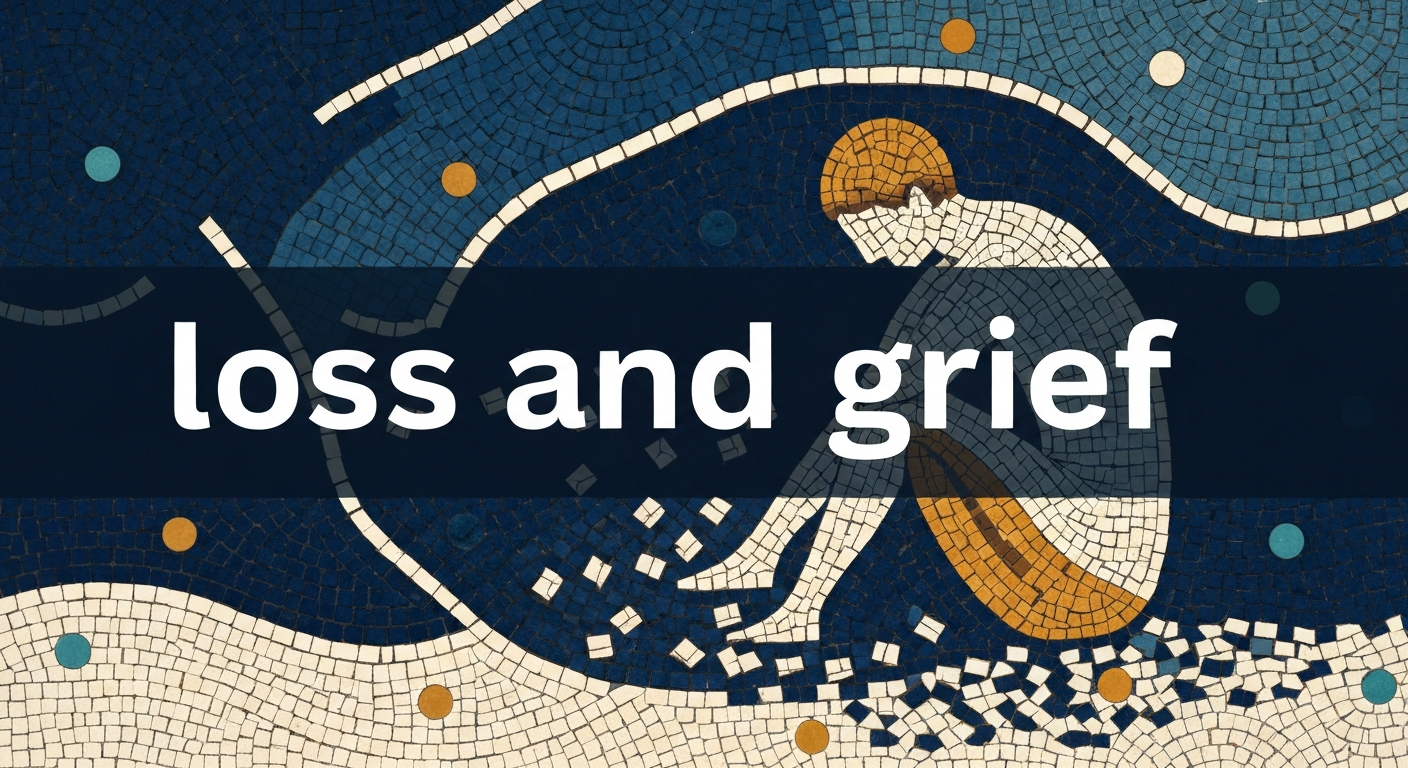
When you can barely manage yourself
Grief is something everybody goes through, and we spend very little time on what it does to diabetes. In emotional distress the patterns get uncertain, and it's hard not to double down on blame, because blame is one way to cope with frustration. That doesn't work out well. Keep things as level as you can, inside a realistic situation where you might need more hugs, more rest, and different things from different people.
Dealing with grief on your own is, in my opinion, far harder than being open about how the stress is hitting your diabetes. It doesn't have to be the focus. The people around you should just know.
Grief takes the mental load you've been carrying for years and drops it on the ground.
And the numbers? They tell the story of what your body is going through, even when you can't find words for it.
The Moment
Grief disrupts everything.
Sleep. Appetite. Focus. Will. All the things you need for diabetes management: grief takes them first.
And somewhere in the middle of loss, you're supposed to keep counting carbs. Keep checking numbers. Keep showing up for a body that feels like it's betraying you by requiring anything at all.
It's not fair. And it's not possible, not the way you normally do it.
The Pattern
Here's what grief does to diabetes management: It makes survival the only goal.
What changes:
- Numbers go high: stress hormones, irregular eating, disrupted sleep
- Routines disappear, and with them, your automated management
- The mental load feels impossible, because everything feels impossible
- Self-care feels selfish: how can you focus on you when...?
- Asking for help feels like one more thing you can't do
This isn't failure. This is grief. And diabetes doesn't pause for it.
Multiple Perspectives
If you're the person with diabetes:
You're not failing at diabetes management. You're surviving crisis while living with a chronic illness. Those are two full-time jobs competing for the same empty tank. The numbers will be bad. That's normal. That's your body processing what your mind can't yet hold.
If you're the support person:
You want to help, but you don't know how. You can see them struggling, not just with grief, but with all the diabetes stuff that usually runs in the background. You're not sure what to do. And you're probably grieving too.
If you're the friend at a distance:
You want to send something. Food? Flowers? A text? You know they have diabetes, but you're not sure what that means right now. You don't want to add burden. You also don't want to disappear.
What Actually Helps
The spouse who took over without asking:
"I didn't know how to help with the grief. But I could help with the diabetes. I ordered supplies when they were low. I put glucose tabs by the bed. I made sure there was food that wouldn't spike their blood sugar too badly. But also, I didn't comment on what they actually ate. I just kept things running so they could fall apart."
Taking over tasks (not asking if they want help, just doing it) is sometimes the most loving thing you can do.
The friend who brought the right food:
"She showed up with soup and a note that said, 'This is low-carb and you don't have to eat it.' That's it. No pressure. No expectations. Just: I thought about what you actually need, and here it is."
Thinking about their specific needs, not just showing up, is what separates presence from burden.
The parent who gave permission:
"My mom called and said, 'Your blood sugars are going to be a mess right now. That's okay. Just survive. We'll fix the numbers later.'"
Permission to let things slide. Explicit permission. Out loud. That was the gift.
The person with diabetes who asked for one thing:
"I couldn't ask for everything I needed. I could barely think. But I managed to say: 'Can you remind me to eat?' That was it. One thing. And they did it. For days, they just reminded me to eat. It kept me going."
One ask. One thing. Sometimes that's all you can do, and it's enough.
The Permission Slip
Let me say this clearly: Your blood sugars will be bad. And that's okay.
High numbers during grief aren't moral failure. They're your body responding to stress, to disrupted routines, to cortisol flooding your system, to eating whatever is easiest because you can't do more.
The goal right now is survival. Not optimization. Not good numbers. Survival.
You can fix the numbers later. Right now, you just need to get through.
The Reframe
FROM: "I'm failing at diabetes management during this crisis"
TO: "I'm surviving crisis while living with diabetes, and that's hard enough"
You're not doing one hard thing. You're doing two: grieving AND managing a chronic illness. Give yourself the grace that difficulty deserves.
This Week's Activity: The One Ask

If you're in crisis, answer this: What is ONE diabetes task someone else could take on right now?
Examples:
- Reminding you to eat
- Ordering supplies
- Keeping glucose tabs stocked everywhere
- Making sure there's food in the house
- Not commenting on numbers
Write it down. Ask someone. Let them do it.
If you're supporting someone in crisis: What is ONE task you can take over without being asked?
Do it. Today.
Download the Crisis Support Cards →
Things to Do Together
- Take over diabetes tasks if possible (ordering supplies, tracking appointments)
- Keep easy food and glucose accessible everywhere
- Give explicit permission to let management slide
- Sit with them, not to fix anything, just to be there
Things to Ask
Ask the person grieving:
- "What can I take off your plate right now?"
- "Do you want me to handle [specific diabetes task]?"
- "What would actually help vs. what sounds helpful?"
- "Can I just sit here with you?"
Ask your support person:
- "I need help with [one specific thing]."
- "Please don't comment on my numbers right now."
- "Just remind me to eat. That's enough."
Things NOT to Say
- "You need to take care of yourself"
- "Don't let your blood sugars get out of control"
- "You know your [loved one] would want you to take care of your health"
- "Have you checked your blood sugar today?"
- "I'm worried about your numbers"
The person grieving knows their numbers are bad. Reminding them doesn't help. Presence helps. Taking tasks helps. Giving permission helps.
Shows of Support
Crisis support looks like:
- Doing diabetes tasks without being asked
- Sitting with them during hard moments
- Not commenting on numbers, at all
- Keeping supplies stocked quietly
- Saying: "Your numbers don't matter right now. You do."
A small community
Community doesn't have to be big. Right now, it might be one person who just shows up. Someone who's walked through their own grief, or who's learning how to sit with yours. You're going to be innovating in a way that makes the most sense to you, and right now, that might just mean surviving. When you're ready, and only then, the best way you can help me is to help somebody else. But that can wait. Right now, let people help you.
The Bigger Truth
Here's what I want you to know: Grief and diabetes are both full-time jobs. And right now, grief has to come first.
That doesn't mean diabetes goes away. It just means survival looks different. It means the people around you pick up what you can't carry. It means numbers that would normally bother you get to be ignored for now.
The support you need during grief isn't advice. It isn't reminders to take care of yourself. It's presence. It's someone doing the things you can't do. It's permission, out loud, to fall apart.
You're not failing. You're grieving. And the people who love you? They're not waiting for you to get your numbers under control. They're waiting for permission to help.
Let them.
What's Next
Next issue: "The Renegotiation That Never Happened". Looking back across all these transitions, what conversation should have happened that didn't? The series finale, with wisdom from hindsight and action for what comes next.
Until then: The numbers will be bad. The grief is real. And somewhere in the middle, there are people ready to help, if you let them in.
Trapper