When someone is around all the time
Dating is curated. You present the version of yourself you want someone to see.
Living together is not curated. It's the 3 AM alarm that goes off four nights in a row. It's the supplies on the counter and the test strips in the couch cushions. It's the moments you'd rather hide: the bad numbers, the frustration, the mental load, all of it now visible to someone else.
Welcome to the next transition.
The Moment
You've been together for a while. You know each other. And now you're sharing an address.
Within the first week, something happens that wouldn't have happened before. Maybe they wake up to your CGM alarm. Maybe they find a used lancet somewhere they didn't expect. Maybe they see you in the middle of a low, really see it, for the first time.
And suddenly, diabetes isn't something you mentioned once. It's part of the household.
What Gets Revealed
Here's what moving in together surfaces: Everything you used to manage privately is now visible.
Things they'll learn about your management:
- It's a 24-hour cycle. 3 AM is a real time in diabetes.
- You think about food differently than they do.
- The devices beep. A lot.
- Some days are harder than others, and it shows.
- You have systems they didn't know existed.
Things you'll learn about their responses:
- How they handle being woken up
- Whether they hover or give space
- What "checking in" looks like from them
- How they treat the supplies in shared spaces
- Whether they learn or assume
Living together is a mutual discovery. And neither of you had a script.
Multiple Perspectives
If you're the person with diabetes:
You've had years to build systems. Now someone else is in them. Some of that is relief: a partner who might help during a low. Some of it is exposure: they see every hard day now, not just the ones you chose to share. The question isn't whether to let them in. They're already in. The question is how to shape what that looks like.
If you're the partner moving in:
You thought you understood. You'd seen diabetes moments before. But living together is different. The alarms at night. The mental math at meals. The days when they're irritable and you don't know if it's blood sugar or something you did. You're learning what it actually means to share life with this, not just hear about it.
What Actually Helps
The couple who did the household design:
Before moving in, they drew a floor plan. They marked where emergency supplies would live. Where devices would charge. What spaces were "just theirs" vs. "shared." They negotiated the nighttime alarm protocol: who checks first, who sleeps through if possible.
It wasn't romantic. It was practical. And it saved a lot of 3 AM arguments.
The partner who learned the rhythm:
"I started noticing the patterns. Morning numbers tend to be one thing. After work is different. Before bed is its own situation. I'm not managing anything. I just started paying attention. And when something seems off, I can say 'You seem high' instead of 'What's wrong with you?'"
Learning the rhythm isn't hovering. It's presence.
The person with diabetes who didn't hide:
"I used to go to another room to check my blood sugar. I'd hide the lows so they wouldn't worry. But living together meant they were going to see it anyway. So I stopped hiding. And it was better. They saw that I had it handled. And when I didn't, they were there."
Visibility isn't the same as burden. Sometimes it's connection.
The Nighttime Negotiation
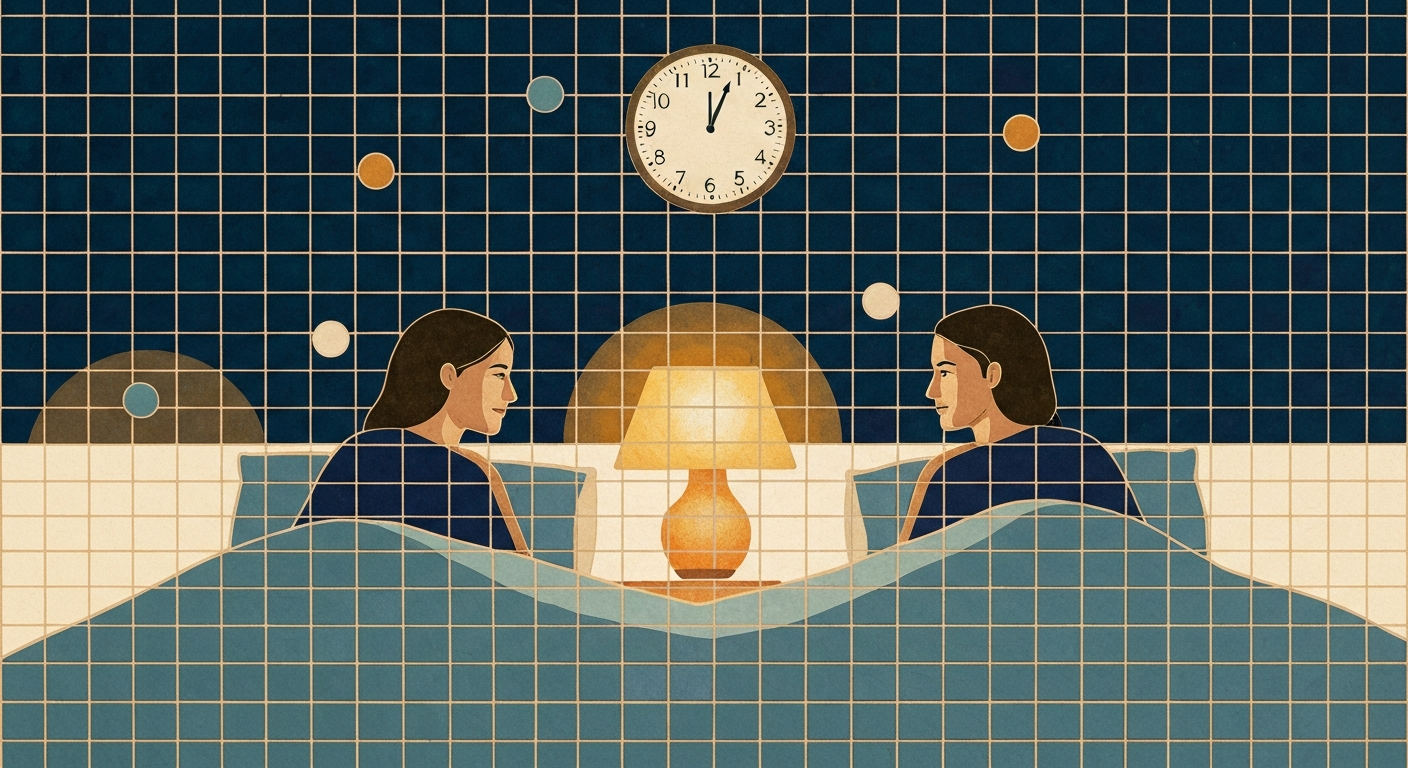
Let's talk about 3 AM.
The alarm goes off. You're both awake now, or one of you is pretending to sleep. Who checks? Who responds? Who gets to be frustrated about being woken up?
This needs a conversation. Not at 3 AM. Before.
Sample agreement:
- Person with diabetes checks first unless they're non-responsive
- Partner stays available but doesn't hover
- After a bad night, both can acknowledge it sucked
- Nobody is blamed for the alarm
Nighttime is the hardest part of sharing space with diabetes. Pretending it won't be hard makes it worse.
The Fridge as Shared Space
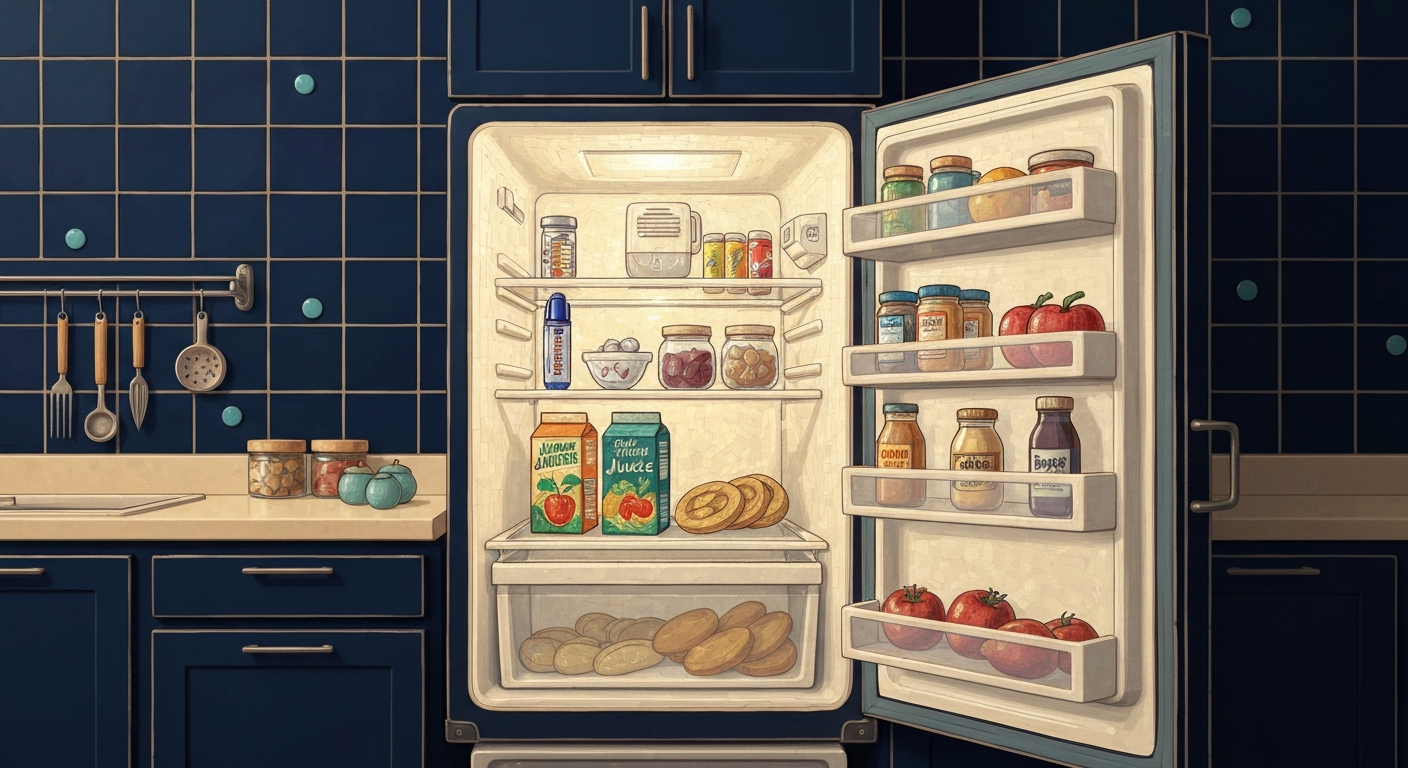
The fridge is a microcosm of everything.
Your juice boxes. Their leftovers. Your insulin. Their beer. The balance of who takes up space, whose needs are visible, whose patterns are accommodated.
Some couples designate a "diabetes shelf." Some integrate everything. Some fight about it once and then figure it out.
The fridge is the conversation you're actually having about how much space diabetes gets in the home.
The Reframe
FROM: "They'll see how hard this really is (and it might scare them away)"
TO: "Living together is a chance to design support that actually fits our life"
The visibility isn't a risk. It's an opportunity. They're going to see it anyway. You might as well build systems together.
This Week's Activity: Household Design Sprint
Get a big piece of paper and draw your shared space. Then mark:
- 🔴 Emergency supplies (non-negotiable, always here)
- 🟡 Daily management spots (where checking happens, where devices charge)
- 🟢 Shared spaces that need agreements (kitchen, nightstand, bathroom)
For each green zone, discuss:
- What's non-negotiable?
- What's flexible?
- What needs an agreement?
Download the Household Design Sprint Activity →
Things to Do Together
- Draw the floor plan before or soon after moving in
- Have the nighttime negotiation conversation
- Designate where supplies live in shared spaces
- Create a text code for "I need help" vs. "I've got this"
Things to Ask
- "What do you need from me when [diabetes situation]?"
- "How much do you want me to notice vs. leave alone?"
- "What's the best way I can help without hovering?"
- "What surprised you about living with my diabetes?"
Things NOT to Say
- "I know you better than you know yourself now"
- "You're always dealing with diabetes stuff"
- "Why didn't you just wake me up?" (when they didn't need to)
- "I can't handle this" (when what you mean is "I'm tired")
Living together is hard. Diabetes makes it harder. But it's not an excuse to be careless with each other.
Shows of Support
Shared-space support looks like:
- Texting "We good on juice?" from the store
- Keeping the emergency drawer stocked without being asked
- Not commenting on the number on the CGM, just presence
- Learning preferences, not just procedures
- Making space, literally and emotionally
The systems you build at home also become the foundation for travel. Couples who've worked out nighttime protocols and supply management find that those skills transfer: the same communication that works in your kitchen works in a hotel room.
You're already connected
You already know people going through this: a friend who just moved in with their partner, a coworker figuring out shared routines, a neighbor building a home around a health condition. You're already connected to people who need what you're learning about shared-space support. When something from this issue makes a difference, share it with one of them. The best way you can help me is to help somebody else.
The Bigger Truth
Here's what I want you to know: Living together is the most honest a relationship gets.
You'll see each other at worst. You'll learn each other's patterns. You'll build systems that nobody else will understand.
And diabetes is part of that. Not the whole of it, but part of it. And the way you handle it together says something about how you'll handle everything else.
The visibility isn't the problem. The visibility is the gift. It's the thing that lets someone truly know you, and show up anyway.
What's Next
Next issue: "Becoming a Parent". What gets renegotiated when you're responsible for someone else? When self-care competes with infant care, and "put your own oxygen mask on first" is easier said than done.
Until then: The alarm will go off. The supplies will pile up. And somewhere in the middle of the mess, you'll build a home that works for both of you.
Trapper