Walking into a room full of people who don't know
The backpack was heavier than it looked.
Not because of the books. Because of everything else stuffed inside: the kit, the snacks, the juice boxes, the glucose tabs tucked into the front pocket where you could reach them without anyone seeing. And underneath all of it, something heavier still: the weight of knowing that everything had changed over the summer, and nobody in this building had any idea.
That's what the first day back felt like.
The Moment
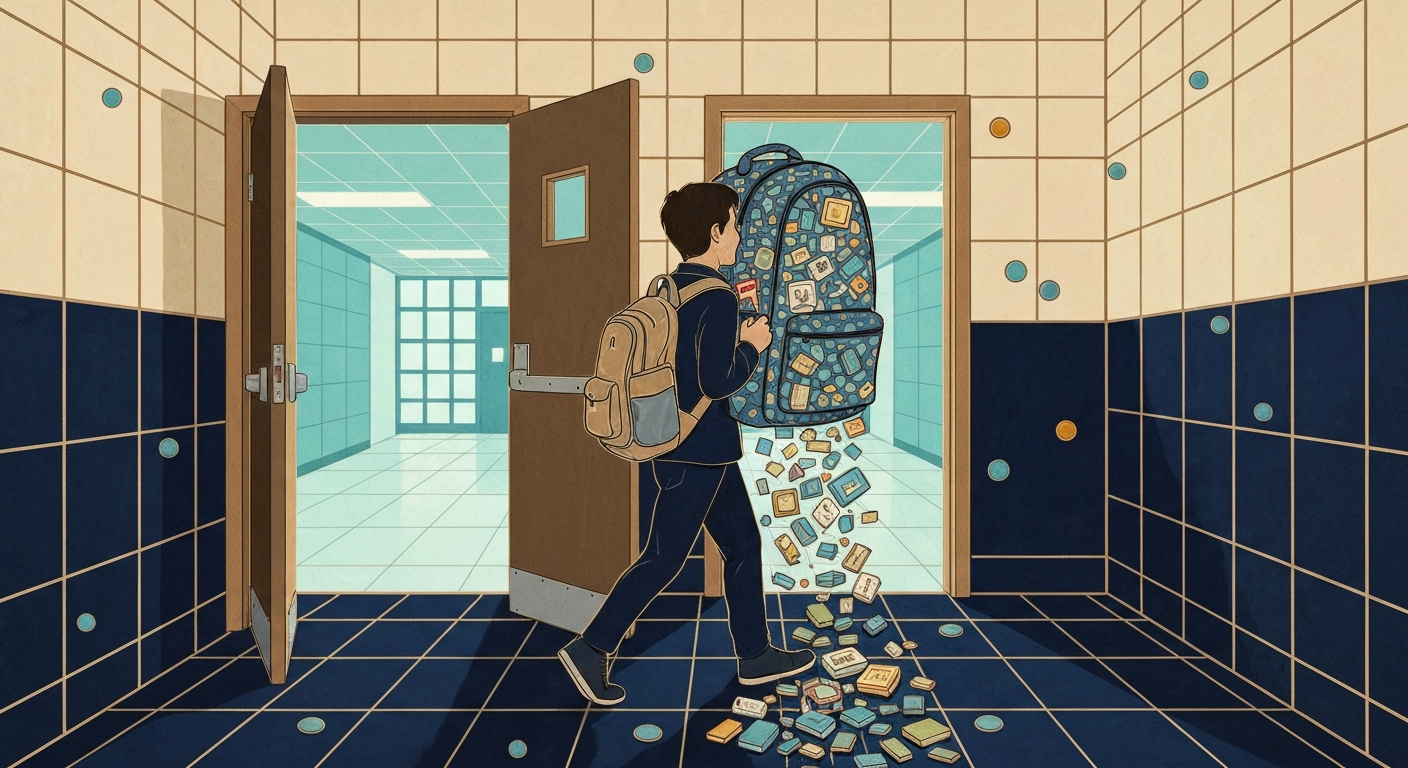
You walk through the doors. Same hallway. Same lockers. Same faces from last year, maybe even the same teacher waving from her classroom. Everything looks exactly the same.
But you're not the same.
And now you have to figure out: Who do I tell? What do I say? Where can I check my blood sugar without an audience? What happens if something goes wrong in the middle of class?
The questions pile up faster than you can answer them. So you do what feels safest: You keep your head down. You find your seat. You smile when someone says hi. And you carry everything alone, at least for now.
The Pattern

Here's what I've learned after decades of walking into rooms where nobody knew: The first transition teaches patterns.
How you handle that first day back sets them: the choices you make about disclosure, the workarounds you develop, the people you trust (or don't). Those patterns follow you into every future transition.
Some of those patterns are survival strategies that work. Some become habits that isolate you without meaning to.
The skill isn't figuring out the perfect answer. The skill is learning to ask: Who do I want on my team here? And how do I let them in?
Multiple Perspectives
If you're the student:
You're walking into a place where you used to feel normal. Now you're carrying something that sets you apart. The question isn't just "Who do I tell?" It's "What version of myself do I want to be here?" You might want everyone to know so you don't have to hide. You might want nobody to know so you can just be yourself. Both feelings can be true at the same time.
If you're the parent:
You can't walk in with them. You've packed everything: supplies, notes, instructions. But the handoff happens at the door. You're trusting a building full of people who haven't read the 504 plan yet, who might not understand what a low looks like, who will see your child as just another student in a crowd of students. The hardest part isn't the preparation. It's the letting go.
If you're the teacher:
A new student shows up with a health form in their file. Or maybe an old student comes back and something's different. You want to help. But you're also managing 25 other kids and a new curriculum. What you need isn't a medical textbook. It's a 5-minute conversation about what to actually look for.
What Actually Helps
The teacher who noticed:
I've been on both sides of this: as someone who grew up with Type 1 diabetes and as a teacher who has worked with students managing it in my classroom.
Here's what I know: Sometimes a student lingers after class. They're not being slow. They're checking, or waiting for a low to pass, or just needing a moment before facing the hallway again.
The teacher who notices this doesn't make a big deal of it. They just say, "Take your time." Maybe a small nod. Maybe nothing at all, just the space to do what needs doing.
That's not grand intervention. That's presence. And sometimes presence is the entire thing.
The parent who let them lead:
Instead of "I'll tell your teacher everything," try: "What do you want your teacher to know? And how do you want them to find out: from me, from you, or from both of us together?"
The student who feels ownership over their own disclosure is the student who learns to build support for themselves.
The classmate who just didn't make it weird:
Sometimes the best thing a friend can do is... nothing. You pull out glucose tabs during class, and they don't stare. You step out for a minute, and they don't ask twenty questions when you get back. They just kept being your friend.
That's support too.
The Reframe
FROM: "I have to hide this and figure it out alone"
TO: "I get to decide who knows what, and I can build support one person at a time"
The first day back isn't a test you pass or fail. It's the beginning of learning how to let people in, strategically, at your own pace, on your own terms.
This Week's Activity: The Invisible Backpack
Take a few minutes, together or alone, and write down what you "carry" into new situations that nobody else can see. Not just the supplies. The worries. The questions. The hopes. The things that make transitioning hard.
Then ask: Who could help carry some of this? What would it look like to let them?
The download includes cards and paper bags for a fuller version of this activity, perfect for families who want to understand what everyone's carrying.
Download the Invisible Backpack Activity →
Things to Do Together
- Before the first day, walk through the building together (if possible)
- Identify one adult in the building who could be a point person
- Practice the 30-second explanation: What would you say if someone asked?
- Create a "what to do" card for your backpack, just in case
Things to Ask
- "Who do you want to know about your diabetes?"
- "Where do you feel most comfortable checking your blood sugar?"
- "What do you want me to handle vs. what do you want to handle yourself?"
- "Is there anything you're nervous about?"
Things NOT to Say
- "Just tell everyone, it's not a big deal"
- "Why are you embarrassed about it?"
- "You're making this harder than it needs to be"
- "I'll handle it, you don't have to worry"
The person living with diabetes gets to choose their own disclosure pace. Pushing too hard, even with good intentions, makes the backpack heavier.
Shows of Support
Sometimes support looks like:
- Packing the kit without being asked
- Waiting in the car a few extra minutes on day one
- Texting "How did it go?" and accepting "Fine" as an answer
- Celebrating the small things: "You told one person. That took guts."
A small community
Community doesn't have to be big. It can be one other parent figuring out the first-day-back conversation, one teacher who wants to understand, one friend who's carrying their own invisible backpack. You're going to be innovating in a way that makes the most sense to you, finding your own way through this transition. And when something works, the best way you can help me is to help somebody else. Tell one person what you tried.
The Bigger Truth
Here's what I want you to know: This first day back is just the beginning.
Every major transition (new schools, new jobs, new relationships, new chapters) will ask the same questions again. Who do I tell? What do I say? How do I build support in a place where nobody knows yet?
But here's what also happens: You get better at it. Not because transitions get easier, but because you learn how to rebuild. You learn who to look for. You learn what works.
And you learn that the backpack doesn't have to be carried alone, even when it feels that way.
What's Next
Next issue: "The School Nurse Conversation". When does official support actually help, and when does it feel like surveillance? How to make the 504 plan match the human reality.
Until then: The backpack is heavy. But you don't have to carry it alone. And the first person you let in? They're not just helping you now. They're teaching you how to build teams for every transition that follows.
Trapper